


Clean Hand Save Lives

Before touching a patient
Continue reading

Before touching a patient
Continue reading
16 May 2014 – On 15 May 2014, the National IHR Focal Point for the Netherlands notified WHO about a second laboratory
Continue readingThe Chest & Respiratory Care Clinic specializes in the diagnosis, treatment and management of respiratory problems. The specialists at the clinic also provide the full range of treatments for a variety of chronic lung diseases such as tuberculosis, chronic obstructive pulmonary disease (COPD), emphysema and asthma.
(For more information, please see each clinic.)
Our state-of-the-art facilities and diagnostic tools deliver the highest levels of accuracy for every health assessment.
There is no cause for concern about about lodging arrangements when you visit any of our top-rated clinics, as there is adequate space for treatment, as well as private consultations, for example with patients living with HIV, in addition to rooms for nutritional counseling and health education.

Recent statistical data shows that the prevalence of kidney disease among Thais is of mounting concern, as is the potential shortage of resources in the form of both medical personnel and advanced facilities to treat it. The Bangkok Hospital Pattaya Kidney Clinic has been recognized since its establishment for its excellence in treating a broad range of kidney problems, utilizing the latest diagnostic testing technology and an array of dialysis options.
The extensive team of specialized medical professionals at the clinic, including nephrologists and trained dialysis nurses, works in concert to create, implement and manage successful state-of-the-art dialysis programs, and strives round the clock to help patients and their families adjust to the changes kidney problems can bring.
The kidneys consist of two bean-shaped organs, each about the size of a fist, located near the middle of the back just beneath the rib cage. Kidneys are among the most important organs in the human body, functioning as a filtering system and removing waste and fluids from the body in the form of urine.
They also perform other vital jobs like regulating the body’s water, blood pH, and other minerals in the blood such as sodium, potassium, phosphorus and calcium; removing drugs and toxins introduced into the body; and releasing hormones into the blood to help the body regulate blood pressure, make red blood cells, and develop strong bones.
Diabetes, high blood pressure (hypertension), certain classes of medications and chemicals, and genetic diseases can compromise kidney function as can kidney stones, chronic kidney infections and urinary tract infections.
(Please see the enclosed packages for details of our services.)
Other facilities for detection of kidney-related disorders include ultrasonography and a clinical chemistry laboratory for the diagnostic testing of both blood and urine analysis.

Osteoporosis A debilitating disease that can be prevented and treated
Continue reading
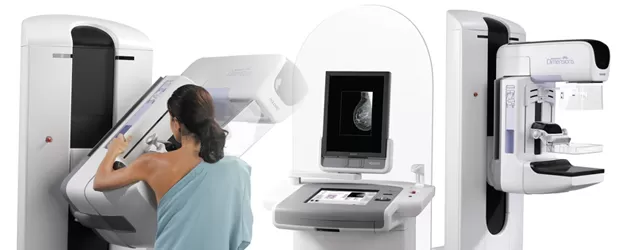
A specific type of breast imaging that can produce results in 2D and 3D at the same time, taking about 10 seconds for each image and get a good result that helps detect cancer and makes diagnosis between the breast lump and tumor more accurate. Radiation oncologist can read the image in each dimension or each slices out a reconstruction image to analyze the shape and size of suspected lump. It can diagnose the difference between fat, connective tissue and lymphatic system to find small sized calcium that can signal the presence of cancer. Staging of the condition is a significant factor in the treatment as ‘the earlier the condition is found the more chance of cancer recover and treatment’.
3D Digital Mammogram comes with a low compression unlike the old device (X-ray) as the image goes in +/- 15º and displays a result in 3D. This makes the procedure less painful. Not only the radiation oncologist can read the result more accurate but also reduce recall rates and improves the quality of patients identification for breast biopsy of each patients.
Women age from 35 years old are advised to have breast examination every year or according to the specialist’s recommendation.

Clinical musculoskeletal MR imaging is now transitioning from 1.5T to 3T systems.
The advantages of higher field strength in the evaluation of musculoskeletal disorders are apparent since the better signal-to-noise ratio (SNR) and contrast-to-noise ratio (CNR) can be applied in multiple fashions to improve imaging times and image resolution.
The potential for demonstrating and enhancing the visibility of several osseous, tendinous, cartilaginous, ligamentous and other intrinsic joint structures in faster scan time has been appreciated. Such clearer visualization of small structures and the pathology leads to potentially increased diagnostic accuracy. The potential of coil technology and parallel imaging for 3T MRI also helps produce superb images comparing to 1.5T systems. Excellent image quality has impressed referring orthopedic surgeons and rheumatologists, plus the reduction in scan time has resulted in greater patient satisfaction and reduced anxiety. It has been shown that 3T MR imaging vastly improves diagnostic abilities in the musculoskeletal system, which means better patient care and management.
Better Image Quality, High Resolution
Better Positioning, More Comfort, 70 cm bore
Better Technology, Digital Broadband MR

Travelers require considerable care to avoid “diarrhea”. If you do succumb to diarrhea, its intensity will depend on how much contaminated food or drink you con
1. Eat food served steaming hot and cooked to order rather than food left out on trays or in chafing dishes. Among fruits, choose those that have to be peeled (like oranges, bananas) rather than those you consume with the skin intact (like grapes). Bread is usually safe. Choose bottled soft drinks over freshly squeezed fruit juices or locally produced drinks like “nam oy” (sugar cane juice). Buffets, a great way to try a variety of local foods and also one of the best way to contact diarrhea !
2. Avoid salads, uncooked fresh vegetables, and all shellfish.
3. Microorganisms clinging to people’s hands are a major source of contamination. Do not eat anything that has been touched by hands.
4. Drinks with cube ice or tube ice are safe; drinks made with crushed ice or chipped ice from blocks are not.
Should you get a persistent case of diarrhea, remember to drink lots of fluids, as dehydration is a particular problem. If children come down with diarrhea, it can be very serious and a physician should be contacted to recommend rehydration salts. You should also contact a physician anytime you pass blood, have violent diarrhea or vomiting, as these are symptomatic of Amoebic Dysentery and haemorrhagic fevers like Cholera or Yellow Fever, and thus life-threatening.

Diabetes is a chronic disease which may cause many subsequent illnesses and effects in the different organs in the body,
Continue reading
Filler injection is a popular cosmetic treatment used to smooth out unwanted wrinkles, fuller lips,
Continue reading